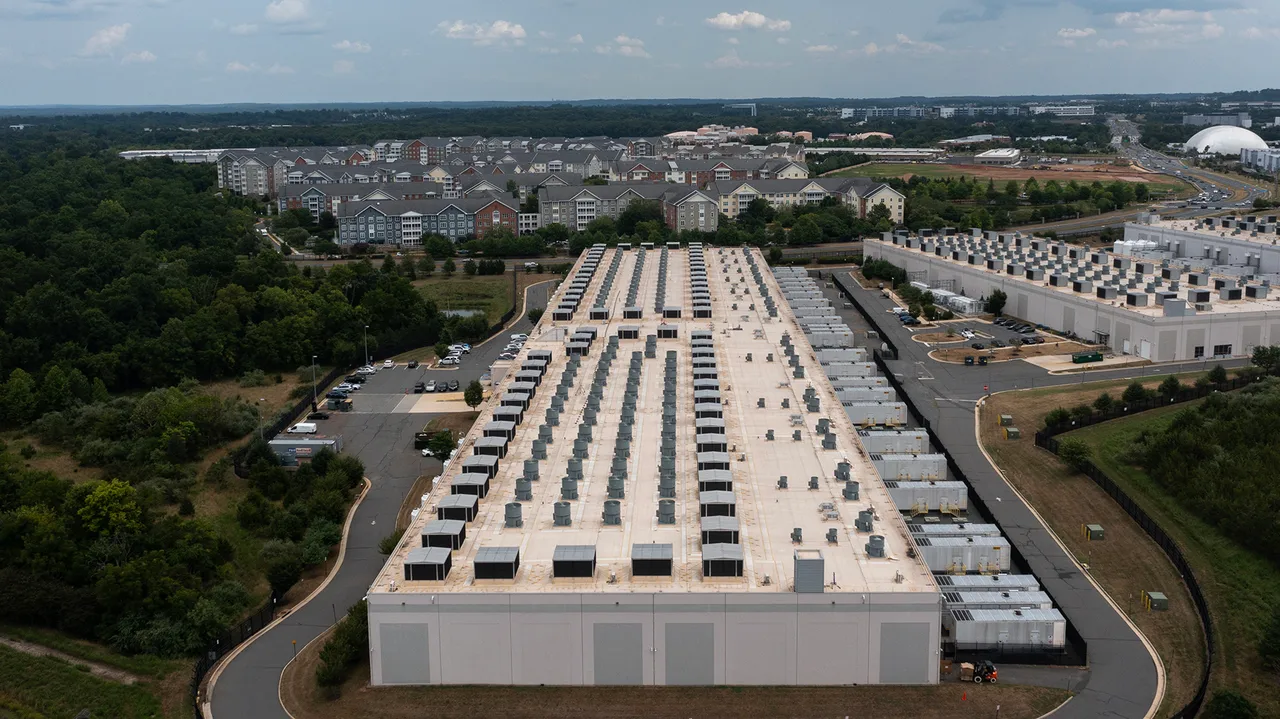
A data center can have land, permits, GPU servers, cooling equipment, and construction capital—and still have no commercially useful deployment date.
The missing piece is firm power delivery.
In July 2026, Amazon urged Virginia regulators to allow hyperscale data center operators to voluntarily fund transmission facilities built specifically for their campuses. The proposal would use contributions in aid of construction, commonly known as CIAC, to place more of the financial responsibility on the large-load customer creating the new demand.
This is not simply a debate about who pays an electricity bill. It signals that AI data center procurement is moving upstream.
Infrastructure buyers now need to evaluate transmission lines, substations, utility studies, financial guarantees, demand charges, energization schedules, and stranded-asset risk before ordering the compute module.
The question is no longer:
“How much power exists in this region?”
The better question is:
“How much firm power can reach our meter, on what date, through which upgrades, and at whose risk?”
WHAT AMAZON ACTUALLY PROPOSED IN VIRGINIA
According to Data Center Knowledge, Amazon presented its proposal during the Virginia State Corporation Commission’s review of Dominion Energy Virginia’s annual Rider T1 proceeding.
Amazon argued that large-load customers should be permitted to use their own capital to fund transmission infrastructure serving their projects. Under this structure, the hyperscaler would accept more direct financial exposure instead of passing the entire upgrade risk to utilities and other ratepayers.
The commercial logic is straightforward. If a transmission line or substation is primarily required by a new AI campus, the customer creating that demand may be better positioned to finance it.
As a result, the utility may face less stranded-asset risk if the project is delayed, reduced, or canceled.
However, Dominion argued that transmission CIAC cannot be treated as a simple customer contribution. High-voltage infrastructure may support several customers, improve regional reliability, or become part of the wider PJM transmission system. Therefore, the issue may involve PJM planning rules, Federal Energy Regulatory Commission jurisdiction, retail tariffs, and regional cost allocation.
As of the July 29 report, the Virginia Commission had not issued a final decision.
Do not read the headline as an approved fast-track program.
Amazon proposed a funding mechanism. It did not propose bypassing transmission planning, permitting, reliability studies, or regulatory review.
POWER AVAILABILITY IS NOW A PROCUREMENT SPECIFICATION
Many data center proposals describe a site as having “100 MW available” or being located “near a 500 MW substation.”
Those statements are not enough.
Power located near a property is not necessarily power that can be delivered to the facility. Likewise, theoretical utility capacity is not the same as contracted, studied, construction-ready capacity.
Before approving an AI data center site, buyers should separate five different power conditions:
Regional generation capacity
Transmission capacity
Substation capacity
Customer interconnection capacity
Firm power available at the project meter
A site may pass the first two tests and still fail the final three.
For this reason, the utility conversation should produce a documented energization pathway. That pathway should identify the point of interconnection, required upgrades, study status, voltage level, available capacity by phase, expected completion date, and cost responsibility.
PRO TIP:
Ask the utility for an energization schedule in MW tranches.
“20 MW in Q2, 60 MW in Q4, and 120 MW after the transmission upgrade” is useful for planning. “Up to 120 MW available” is not.
THE HIDDEN COST STACK BEHIND GRID CONNECTION
The traditional AI data center budget usually includes land, civil work, servers, racks, cooling, power distribution, fire protection, monitoring, and commissioning.
That model is now incomplete.
A realistic power-readiness budget may also include:
Utility interconnection studies
Transmission or substation contributions
Medium-voltage switchgear
Main transformers
Protection and relay equipment
Revenue metering
Utility deposits and financial guarantees
Minimum-demand commitments
Dedicated line or feeder construction
Easement and right-of-way costs
Temporary or bridge-power systems
Financing costs during grid delays
Cancellation or stranded-capacity exposure
The true cost of power readiness can be expressed as:
True Power-Readiness Cost
= Direct Grid Contribution
Customer-Side Electrical CAPEX
Financing Cost
Schedule-Delay Exposure
Stranded-Capacity Risk
A project with cheaper land can become more expensive if it requires a major transmission extension.
By contrast, a higher-priced site with an existing power-delivery pathway may produce a better return because the GPUs begin generating revenue earlier.
Price the energized date, not just the acreage.
CAN CUSTOMER FUNDING ACTUALLY ACCELERATE A PROJECT?
Potentially, yes.
Customer funding can reduce uncertainty over who will provide capital for a project-specific transmission facility. It can also demonstrate that the load request is financially serious rather than speculative.
In practice, utilities and grid operators are receiving large numbers of AI load requests, and not all of them will reach construction. Financial commitments, site control, equipment orders, permits, and credible load-ramp schedules help distinguish real projects from placeholders.
Still, private capital cannot eliminate every delay.
Transmission projects may require regional studies, permits, land rights, environmental review, long-lead transformers, high-voltage breakers, protection equipment, and coordination with other grid projects.
Funding can remove one obstacle. It cannot turn a multiyear transmission process into a simple equipment purchase.
Nor should customer funding create a private “fast lane” that displaces projects with greater regional value. That concern is one reason regulators must distinguish customer-specific facilities from infrastructure that benefits the wider grid.
WHAT THIS MEANS FOR MODULAR AI DATA CENTERS
A factory-integrated modular AI data center can shorten the physical infrastructure schedule.
The enclosure, racks, cooling loop, power distribution, fire protection, monitoring, and service access can be integrated and tested before shipment. As a result, less system assembly is required at the final site.
However, modular construction does not create utility capacity.
In fact, a faster factory schedule makes power coordination more important. The project can reach a situation where the compute modules are complete, but the substation or transmission upgrade is not.
The better strategy is to synchronize modular production with the utility’s energization phases.
For example:
Phase 1: Deploy modules for the first 10–20 MW
Phase 2: Expand after the permanent substation is energized
Phase 3: Add capacity when the transmission upgrade enters service
This phased structure limits idle infrastructure and protects capital flexibility.
Cooling architecture also affects grid planning. At 100 MW of IT load, reducing facility PUE from 1.20 to 1.15 lowers total facility demand by approximately 5 MW.
That difference can influence transformer capacity, utility service size, backup-power requirements, and the number of modules the site can support.
PRO TIP:
Do not size the cooling system after the utility application has already been submitted. Model IT load, cooling load, auxiliary load, and redundancy mode together before declaring the project’s maximum MW requirement.
A POWER-READY SITE SELECTION SCORECARD
AI infrastructure buyers should add the following questions to every site-selection review.
What is the confirmed point of interconnection?
A nearby transmission line does not guarantee a practical or approved connection point.
How many MW are available on the first energization date?
Separate initial capacity from ultimate campus capacity.
Which grid upgrades are required?
Identify transmission lines, substations, transformers, feeders, protection systems, and metering work.
Who pays for each upgrade?
Separate utility-funded, regionally allocated, and customer-funded infrastructure.
Is the proposed capacity firm?
Clarify curtailment rights, operating restrictions, emergency conditions, and interruptible-service provisions.
What financial security is required?
Review deposits, letters of credit, minimum-demand charges, termination fees, and long-term commitments.
What equipment is already reserved?
A regulatory approval does not guarantee that transformers or breakers are available.
Can the load ramp be phased?
A staged ramp may reach operation faster than requesting the final campus load on day one.
What happens if the project is delayed?
Understand whether committed capacity, deposits, or utility infrastructure costs become non-refundable.
Can the electrical design support expansion?
The initial substation and medium-voltage architecture should not block the next phase of compute deployment.
BUILD THE GRID SCHEDULE INTO THE ROI MODEL
AI infrastructure ROI is highly sensitive to time.
When grid delivery slips, the project may carry land costs, financing costs, equipment deposits, staffing expenses, and idle infrastructure without receiving compute revenue.
A practical delay model is:
Monthly Delay Exposure
= Carrying Cost of Idle IT Equipment
Lost Gross Margin
Site and Staffing Overhead
Contracted Power Penalties
Additional Temporary-Power Cost
Buyers should compare at least three power-delivery scenarios.
Scenario A: Utility-Funded Expansion
This option may reduce direct customer CAPEX. However, the project may have less control over construction priority and schedule.
Scenario B: Customer-Funded Dedicated Infrastructure
This option increases upfront investment. In return, it may improve project commitment, cost clarity, and control over dedicated facilities.
Scenario C: Phased Hybrid Development
The project begins with existing or smaller-scale capacity while permanent transmission infrastructure is developed. This can bring part of the GPU fleet online earlier and reduce all-or-nothing schedule exposure.
The best scenario is not automatically the one with the lowest grid contribution.
It is the option that produces the strongest risk-adjusted energized date.
PRO TIP:
Assign a financial value to every month of delay before comparing sites. Otherwise, the selection team may save money on land while losing far more through idle GPU capacity.
WHAT BUYERS SHOULD SEND BEFORE REQUESTING A MODULAR AI DATA CENTER QUOTE
A useful modular AI data center RFQ should include more than the server quantity.
Send the following information:
GPU server brand and model
Server dimensions and rack-unit requirements
Rated and peak power per server
Initial IT load and ultimate campus load
Available voltage and frequency
Utility study and interconnection status
Expected energization capacity by phase
Liquid-cooled or air-cooled server architecture
Liquid-to-air heat split
Required supply temperature and flow
Site ambient temperature and altitude
Redundancy target
Fire-protection and inspection requirements
Planned commissioning date
Expansion strategy
With this information, the enclosure, cooling system, CDU, dry cooler or chiller, power distribution, monitoring, and external interfaces can be coordinated around the real power-delivery plan.
ACT’s 40HC modular AI data center can be configured around liquid-cooled or precision air-cooled AI infrastructure. However, the final configuration should always follow the confirmed server load, site conditions, utility pathway, and project approval requirements.
FINAL VERDICT FOR 2026 AI INFRASTRUCTURE BUYERS
Amazon’s Virginia proposal shows where the AI infrastructure market is heading.
Grid access is no longer a utility detail handled after site selection. It is a core procurement package with its own CAPEX, contracts, schedule, and risk allocation.
Buyers should stop asking only how many megawatts exist near a site.
Ask instead:
How many MW are firm?
When can they be energized?
Which facilities must be built?
Who funds those facilities?
Who carries the risk if the load does not materialize?
Can the deployment expand in stages?
Once those answers are documented, modular infrastructure can convert the power plan into a repeatable deployment sequence.
Factory integration can compress construction. Efficient cooling can reduce facility demand. Phased modules can align compute investment with energized capacity.
But the first infrastructure product every AI data center must secure is still the same:
Deliverable power.