
N+1 Data Center Cooling: How to Prove Redundancy Under Real Load
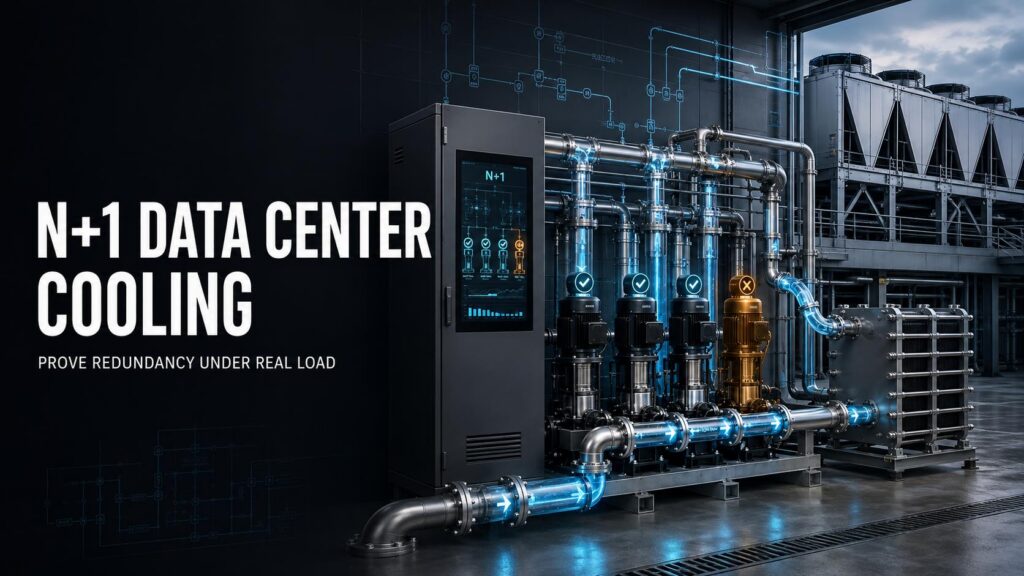
“N+1” appears in the design documents. Then one pump is isolated, a dry cooler module is taken offline, or a control circuit fails. The supply temperature starts climbing, remote racks lose flow, and the operator has to reduce IT load. At that point, the system may have N+1 equipment on paper, but not N+1 performance […]
Data Center Cooling Water Quality: Filtration, Glycol, Conductivity, and Corrosion Control
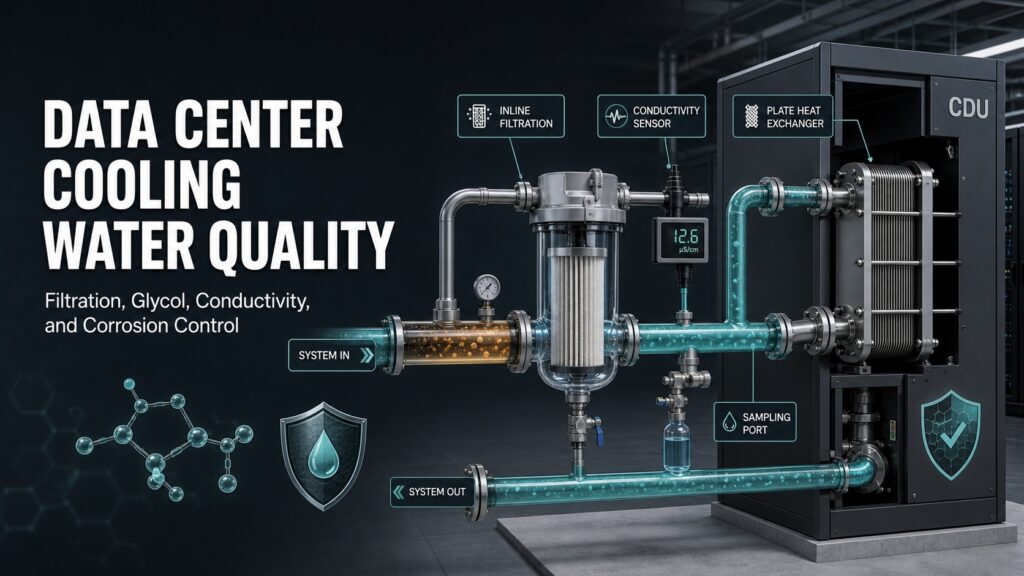
A liquid cooling system can lose performance long before a pump alarm appears. The filter may be loading with debris. The glycol concentration may have changed after a top-up. Conductivity may be rising because of dissolved ions or corrosion products. A plate heat exchanger may be slowly fouling, increasing the approach temperature and reducing the […]
Liquid Cooling Loop Pressure Drop: How to Size Pumps, Pipes, and Manifolds
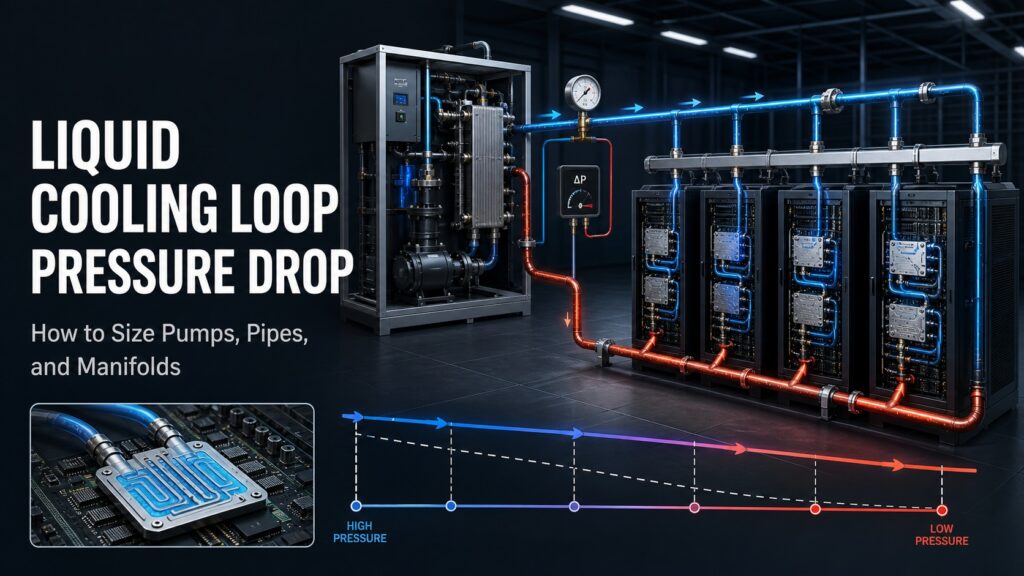
The pump is running. The CDU display shows a normal flow value. Yet the remote AI rack is still running hotter than expected. This is one of the most common hydraulic problems in high-density liquid cooling systems. The pump may be operating correctly at the CDU outlet, while the farthest rack receives insufficient flow because […]
How to Size a CDU for 100kW+ AI Racks: Heat Load, Flow Rate, and Redundancy
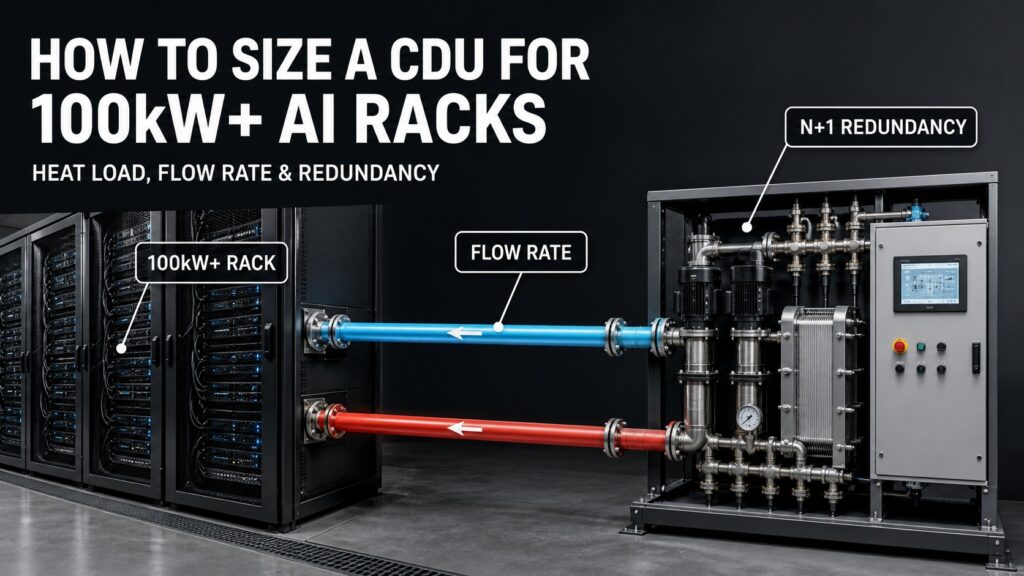
A data center can have hundreds of megawatts of planned power and still select the wrong CDU. The problem usually starts when buyers use the total campus capacity as the primary cooling input. A 100MW or 360MW campus number does not tell you how much heat one rack produces, how much of that heat enters […]
Dry Cooler Approach Temperature Explained: Why Nameplate Capacity Changes at Your Site
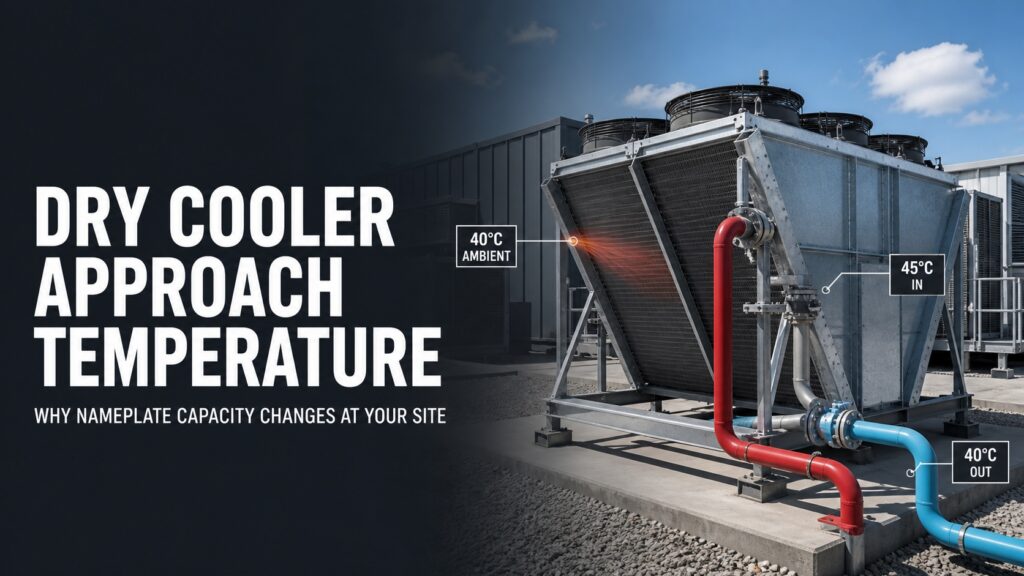
A dry cooler labeled “1 MW” is not a 1 MW machine under every operating condition. That rating belongs to a specific combination of entering-air temperature, entering-fluid temperature, leaving-fluid temperature, fluid type, flow rate, fan speed, and altitude. Change any one of those variables, and the available heat rejection capacity changes with it. This is […]
Read the Cooling Loop Before It Fails
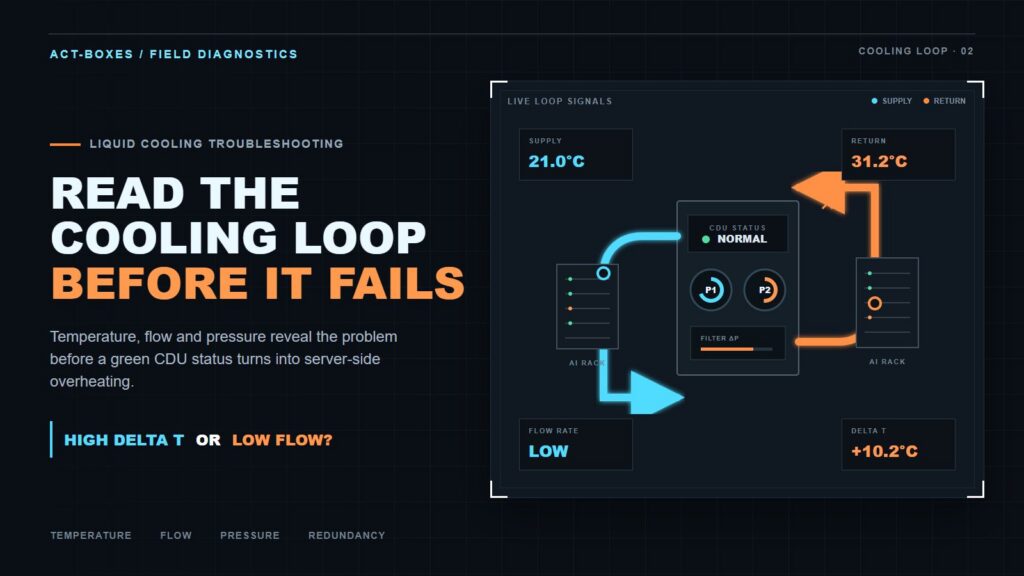
High Delta T or Low Flow? How to Tell the Difference A CDU can show a normal status while the servers at the end of the loop are already running too hot. That situation is common in liquid-cooled AI data centers, high-density GPU infrastructure and liquid-cooled ASIC mining systems. The problem is usually not a […]
How Hot-Air Recirculation Reduces Cooling Capacity
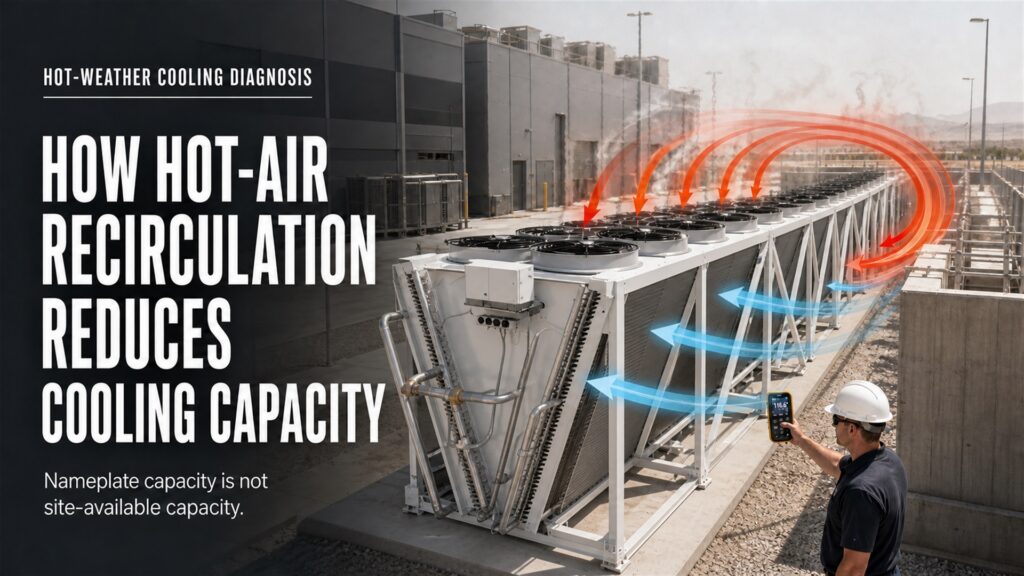
A dry cooler can be selected for a 1MW heat load and still fail to maintain the design water temperature on a 1MW site. The missing number is often not fan capacity. It is the temperature of the air actually entering the coil. A weather station may report 104°F, while part of the dry-cooler coil […]
Hot Climate Mining Container Deployment: Texas Heat, Airflow, and Derating Risk
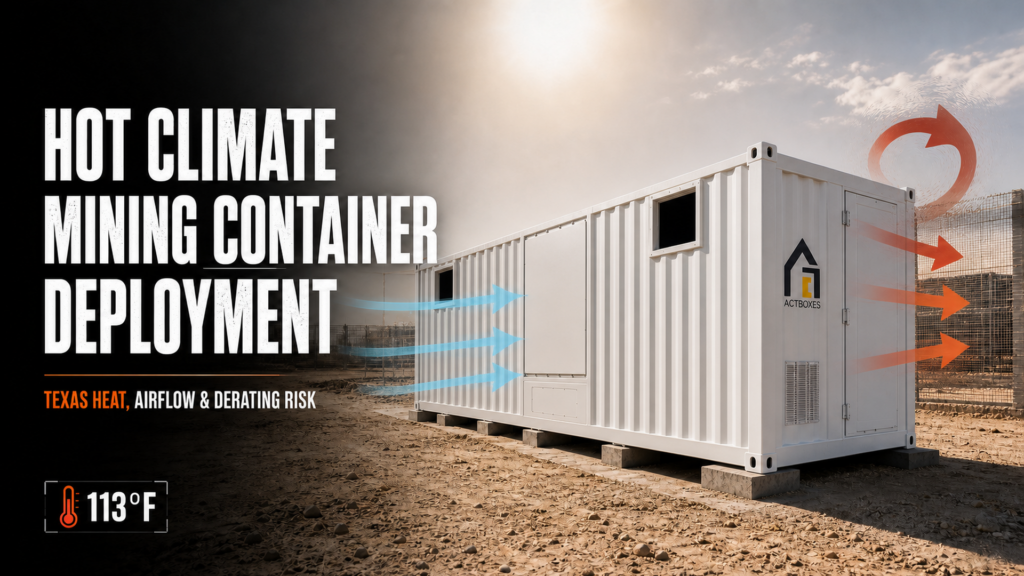
A mining container that supports its full miner count at a 77°F (25°C) factory test can lose that capacity quickly when the outdoor temperature reaches 105°F, the filters are partially loaded with dust, and hot exhaust air is being pulled back into the intake. That is the real conflict behind a Texas bitcoin mining container […]
How to Build a Procurement-Ready Cooling Plan Before Applying for Data Center Power

The utility application is the wrong place to discover that a 100MW AI campus actually needs 122MW at the meter. Yet this happens when developers apply for power using only the expected IT load. The cooling plant, pumps, fans, CDUs, water-treatment equipment, UPS losses and auxiliary systems are added later, turning the original power request […]
360MW AI Campus Cooling Checklist: What Buyers Should Confirm Before Equipment Procurement
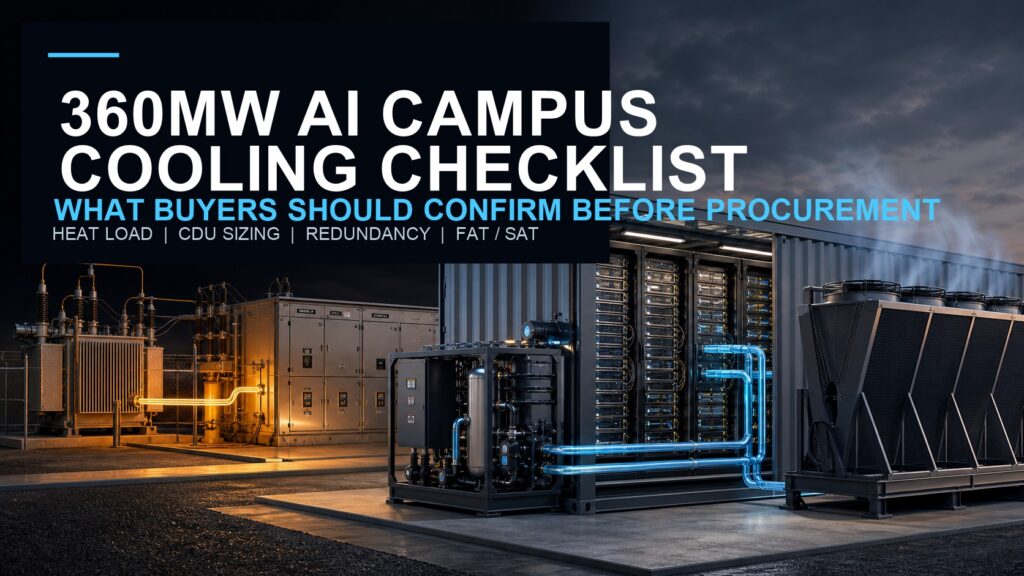
A 360MW headline can hide a 100MW procurement error. Before issuing an RFQ for CDUs, dry coolers, cooling towers, pumps, piping, or control systems, buyers must first determine what “360MW” actually represents. Is it reserved utility capacity, total facility power, designed IT load, contracted capacity, or commissioned load? These numbers are not interchangeable. In June […]