Deployment day is the most dangerous day for your capital. Actually, I have seen million-dollar projects stall because a project manager treated a mining container deployment like a standard shipping job. It isn’t. If you want to hit your 98%+ uptime targets, you must follow the engineering instead of the sales brochure.
Site Prep: Leveling is Not Optional
Stop thinking “level enough” is acceptable. Most operators clear a patch of dirt and call it a day, but that is a recipe for disaster.
Common Mistake
Ignoring a 1% ground slope. Because of this slight tilt, your liquid cooling mining container will develop airlocks in the cooling loops. Consequently, air bubbles trap heat and these hotspots fry your hashboards in weeks. Therefore, you must pour a reinforced concrete pad. Specifically, ensure it can handle the 30-ton localized load of a fully populated 2.5MW mining solution. You should also plan your drainage now, since a puddle under your transformer is an invitation for a short circuit.
The Inspection Barrier: Why UL Matters
You can buy the cheapest box from overseas, but you will pay for it during the AHJ (Authority Having Jurisdiction) inspection.
Pro Tip
In North America, the inspector is your biggest hurdle. If you don’t have a UL certified mining container, they will pull your permit before you even hook up the cables. Every component in a ACT Box—from the breakers to the fans—carries the necessary certifications. This isn’t about bureaucracy; it’s about insurance. Without a UL certified cooling system, your insurance carrier will laugh at your claim if a fire breaks out.
Power Connection: The 2.5MW Balancing Act
Connecting power to a high-density site requires more than just heavy cables. You are dealing with massive current.
Instruction
You must verify phase balancing across your PDU racks. On a 2.5MW mining solution, an unbalanced load of even 5% creates harmonic distortion and heat in your neutral lines. This trips main breakers and wastes energy. Balance your ASIC distribution at the rack level.
The Grid Guard: <8ms STS or Bust
Grid stability is a myth. Every grid has micro-fluctuations.
Common Mistake
Relying on standard mechanical switches. They are too slow. Your ASICs will reboot, and you will lose 15 minutes of hashing every time the grid blinks. We integrate <8ms STS (Static Transfer Switch) technology for a reason. At less than 8 milliseconds, the power handover is faster than your miner’s power supply can detect. Your hardware stays online. Your hashrate stays flat. That is how you protect your mining ROI.
Lifting and Grounding
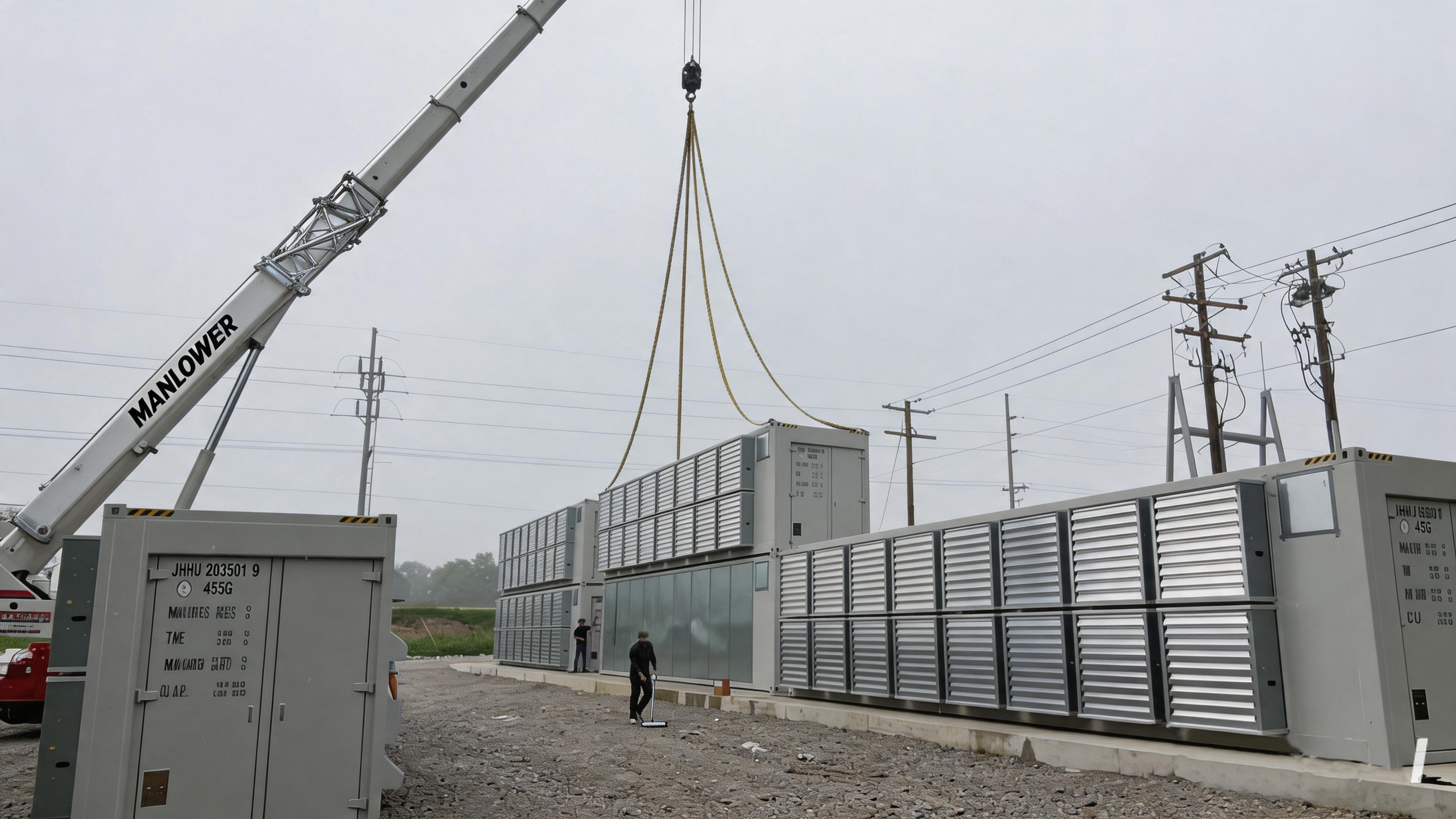
Hire a certified crane operator who understands center-of-gravity shifts. Once the unit is seated, ground it immediately. Use a copper grounding ring around the entire perimeter. A single lightning strike or a transformer surge will turn your high-density investment into a pile of scrap metal if your grounding impedance is too high.
Power is everything. Don’t take shortcuts on the foundation.